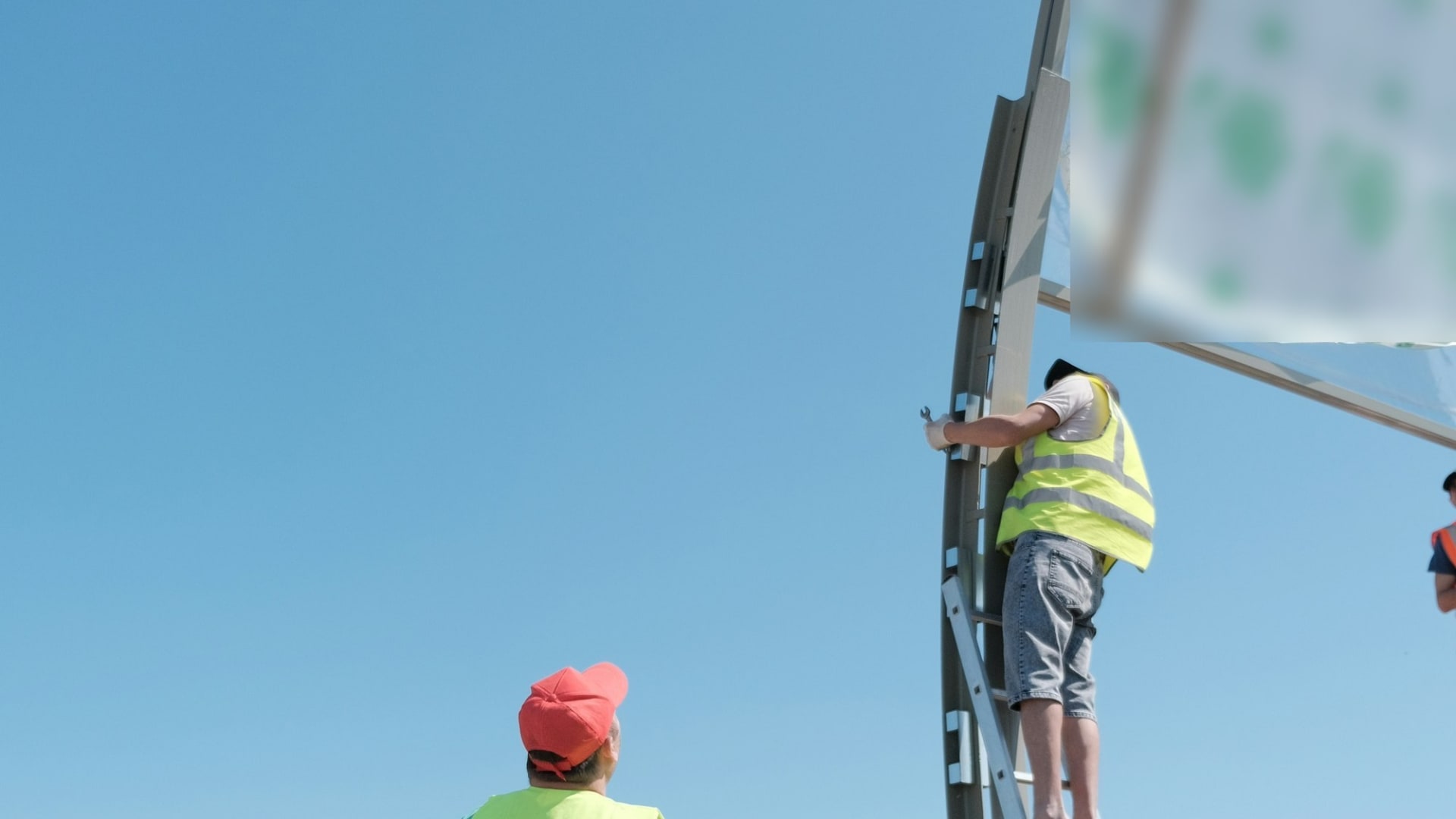
Outdoor signage in Dubai, Abu Dhabi, Sharjah or Doha has to survive a climate most sign materials weren't designed for: summer surface temperatures well above 50°C, intense year-round UV, and occasional sandstorms and humidity spikes. A sign that looks identical to one built for a milder climate can fail in under two years here if the material and construction weren't chosen for it.
Channel letters and illuminated storefront signage
Channel letters, the individually fabricated 3D letters seen on most storefronts and shopping mall facades, are typically built from aluminium returns (the sides) with an acrylic face, lit from inside with LED modules. They're the standard for retail and F&B storefronts because they read clearly both day and night and can be fabricated to almost any typeface or logo shape.
In this climate, the detail that matters most is the acrylic face grade and the LED driver's IP rating. A lower-grade acrylic face will yellow and go brittle under constant UV within a couple of summers; UV-stabilised acrylic holds its colour far longer. LED drivers and power supplies exposed to heat inside a sealed letter box need an adequate IP rating and heat dissipation, or they fail well before the LEDs themselves do.
Monument and pylon signs
Monument signs (low, freestanding signs at a compound or building entrance) and pylon signs (taller, pole-mounted signs visible from the road) are usually built around an aluminium composite panel (ACP) or fabricated metal frame, faced with acrylic or a printed and laminated panel, often internally illuminated. Because they sit fully exposed at ground level, foundation depth and structural bracing matter more here than on a wall-mounted sign, both for wind load and for the weight of the panel itself.
Acrylic composite panel (ACP) vs acrylic vs metal
- ACP (aluminium composite panel): two thin aluminium sheets bonded to a polyethylene core. Rigid, lightweight, doesn't warp in heat, and the standard choice for large flat sign faces and building cladding-style branding.
- Cast acrylic: used for lettering, panels and illuminated faces where light needs to pass through evenly. UV-stabilised acrylic resists yellowing far better than standard grades and is worth specifying for anything facing direct sun.
- Sheet metal (aluminium or stainless): used where a sign needs a brushed, engraved or powder-coated finish rather than a printed or backlit one, common on monument signs and premium storefronts.
Weatherproofing details that actually matter
Beyond the face material, three details decide whether an outdoor sign lasts: sealed seams (so summer humidity and dust don't get inside an illuminated box), a UV-rated finish or laminate on any printed graphic, and drainage in the housing so trapped condensation doesn't sit against the electronics. None of these are visible in a finished sign, which is exactly why they're the details worth asking a fabricator about before production starts, not after a sign fails.
Municipality and landlord approvals
Outdoor signage in the UAE and Qatar generally needs sign-off from more than one authority: the relevant municipality (Dubai Municipality, Sharjah's authorities, or Ashghal and municipal bodies in Qatar) for anything visible from a public road, and separately the mall, tower or compound's landlord for anything on their facade. Requirements cover size, illumination brightness, setback from the building edge, and sometimes bilingual Arabic-English text. These vary enough by emirate, by municipality, and by landlord that they're confirmed at brief stage for each project rather than assumed from a previous one.


