Food packaging carries more requirements than retail packaging: it has to be food-safe, hold up through delivery transit, and often needs to keep hot food hot and cold food cold, on top of looking branded.
Common formats
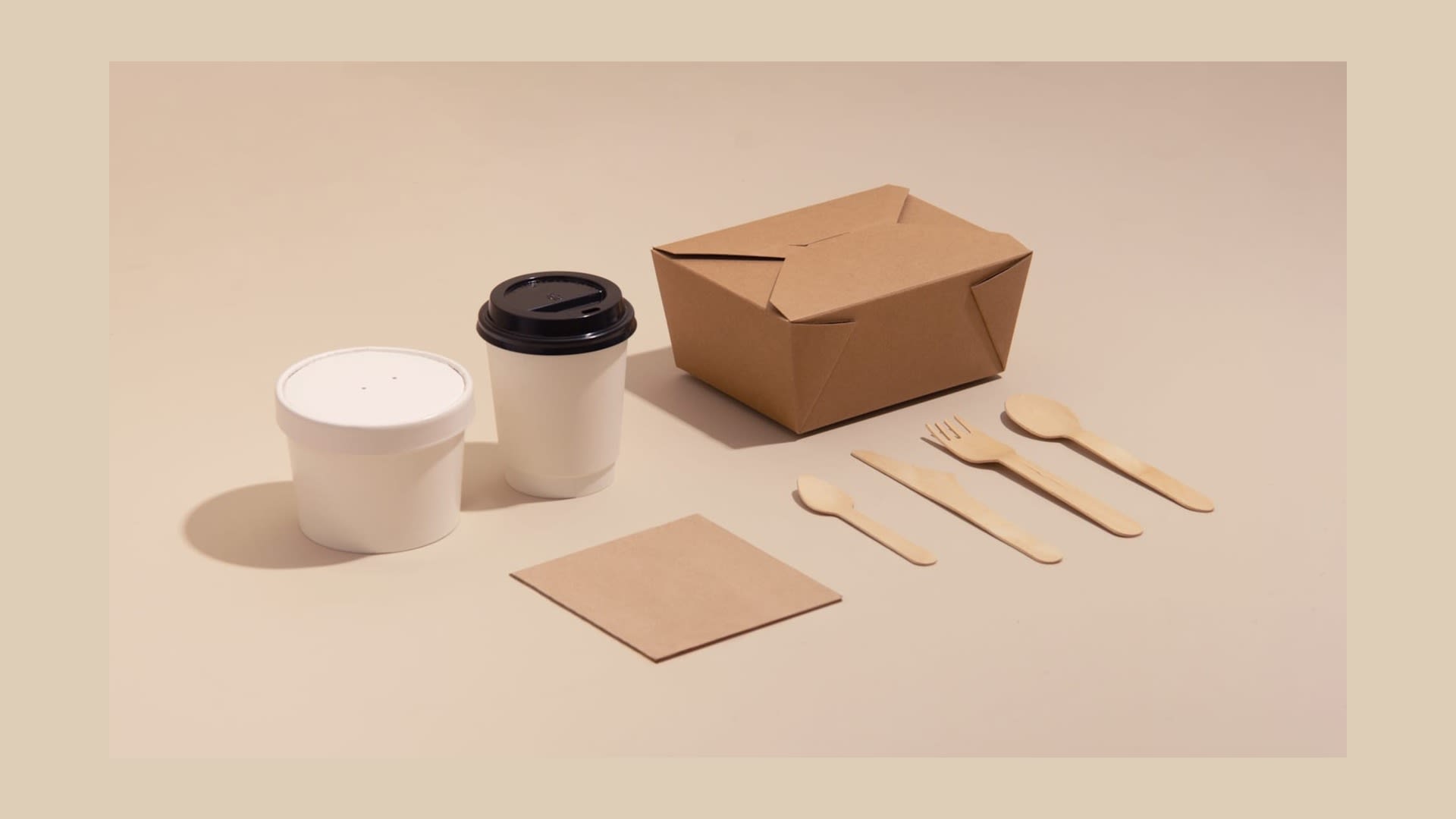
- Takeaway boxes: kraft and corrugated.
- Hot and cold cups.
- Hardboard boxes for bulk items.
- Grease-resistant wrap for baked goods and sandwiches.
- Compartmentalised trays for multi-item meals.
Food-safe material requirements
Food-grade kraft and corrugated board with a grease-resistant or moisture-resistant lining is standard for anything in direct contact with food, particularly items that spend meaningful time in delivery transit.
Branding on food packaging
UV printing or pre-printed stock carries a brand's logo and colours directly on the box, cup or wrapper, keeping the unboxing consistent with a restaurant's signage and social media, especially valuable for delivery-only or delivery-heavy businesses where the packaging is often the only physical brand touchpoint a customer sees.
Delivery-specific considerations
Tamper-evident seals or stickers, insulated or double-wall cups for hot beverages, and leak-resistant lids matter more for delivery orders than for dine-in service, where the packaging travels and sits for longer before being opened.